Best Countries for Black Expats: Where Black Americans Are Thriving Abroad
During an unprecedented time of uncertainty in the United States, a lot of Americans are looking for a way out of the madness…and a way into finding the true “American dream”.
For many Black Americans, that search has turned global.
Because once you start asking yourself what you really want (peace, safety, affordability, community), you naturally start wondering: what is the best country for Black people to move to? Where can we actually thrive, not just survive?
Today, we’ll look at five stories from Black Americans who moved abroad and found home in countries all over the world. If you’ve been looking into the best countries for Black expats, these experiences will give you a real, honest glimpse into what’s actually possible.
Aleese’s Story: “I’m living large. I am upper middle class in China.”
Age: 35
Where she lives: Chengdu, China
Notable costs: ~$556/month rent + ~$75/month groceries + $0.28/subway roundtrip
Biggest benefits: Low cost of living, great work-life balance, feels safe
Downsides: Homesickness, constantly standing out as a Black foreigner

Aleese Lightyear
If you ask most Americans what life in China is really like, you’ll usually get a lot of hesitation, half-formed opinions, and more than a little disbelief.
“It’s polluted.”
“It’s restrictive.”
“Surely it can’t be better than life in the U.S.”
And then there’s Aleese, who moved to China in 2019.
“When I tell them how modern the cities are, people are shocked,” she says. Even more surprising is the cost of living: “Less than $4 USD for a Michelin-recommended meal.”
But the biggest difference isn’t just the prices, it’s the lifestyle. “The quality of my lifestyle in China is much better than the quality of life I had living in the US.”
Before China, Aleese was living a completely different reality. She grew up in Ann Arbor, Michigan, then moved to New York City and spent ten years working in reality TV production. The burnout was real. “Being in my 20s, I felt like a 50-year-old woman,” she says. “I was living paycheck to paycheck, which sucked.”
Eventually, she hit a breaking point. “One day I just woke up and it just clicked that this is not the life that I want for myself.”
So she left.
Today, Aleese teaches first-year university students and works just 18 hours a week. She earns about $30,000 a year, but in China she says, “I’m living large. I am upper middle class.”
Her downtown three-bedroom apartment costs $556 a month, but her job covers half—so she pays $278.
Even daily life is cheaper. Her subway commute is about 28 cents round trip, groceries average $75 a month, and eating out can be “$2 on a bowl of noodles” at her neighborhood spot.
The move wasn’t easy, though. “It was really difficult to say goodbye to my family and friends,” she admits.
And being Black in a homogenous country means standing out constantly. “I cannot go a day being outside without someone pointing at me and saying, in Chinese, look, there’s a Black person, look, there’s a foreigner.”
Still, she says, “I feel completely safe as a woman, as a woman of color.” And in the end, China changed more than her finances. “My self-confidence has improved through the roof.”
Check out Aleese’s full story here.
Kema & Nicholas’ Story: “In Costa Rica, people are treated as humans first.”
Age: 41 (Kema), 43 (Nick)
Where they live: Costa Rica
Annual income: ~$30,000/year
Biggest benefits: Slower pace, community, affordable healthcare, freedom to work for themselves
Downsides: Missing family, adjusting to a new environment
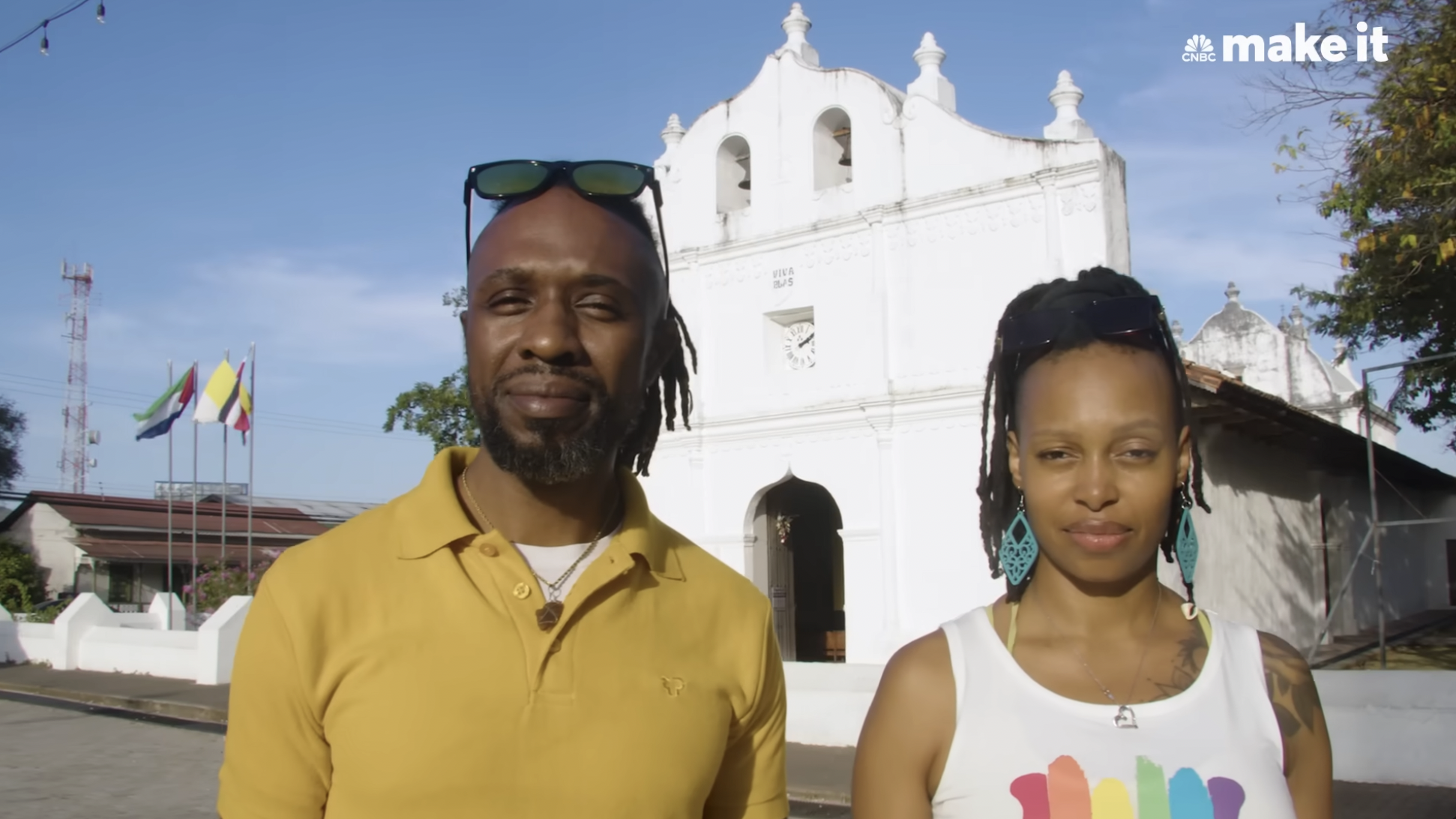
Kema & Nicholas Hopper
Kema, 41, and her husband Nicholas Hopper, 43, relocated from the U.S. to Costa Rica in 2018, and now their family lives on $30,000 a year.
“Ten years ago, I would not have believed you if you told me that this is where we would be,” Kema says. “I am absolutely more happy here than in the United States.”
But for Kema, it’s not just about the money.
“Energetically, it's lighter,” she explains. “It's the environment. It's the people, too.”
She says locals “smile and they greet you,” and the warmth is part of everyday life: “They call you daughter or queen or beauty or morenita, you know, and it's always love.”
What’s surprising is that they used to earn more in the U.S. “In the United States, we earned six figures, but we were both doing work that we didn't love,” Kema says. The biggest financial shift in Costa Rica has been freedom: “Being able to work for ourselves.” And instead of feeling trapped by work, Kema says, “my methods of earning income don't feel like a job.”
They didn’t move with a huge safety net either. “We did pretty much start over,” she says. “Between the two of us, we had four suitcases and two backpacks.”
They hadn’t even seen the home they rented and adjusting meant learning to live with the jungle, including “snake encounters.”
Even with a lower, fluctuating income, they’re still okay. “Our money absolutely goes further here than in the U.S. We make less money, but we're still living pretty comfortably,” they explain.
Kema is blunt: “We would never have made it alone…Like we would have probably had to move in with my mom if we were making what we make now in the United States.”
For Kema, the quality-of-life difference is also personal. In the U.S., “I feel like I'm seen as a Black woman first. In Costa Rica, I feel that people are treated as humans first,” she says.
When she sums it up, it’s simple: “I am definitely happier living in Costa Rica than I used to be in the United States.”
Check out Kema and Nicholas’s full story here.
Blair’s Story: “Serbia is the least racist country.”
Age: 35
Where she lives: Belgrade, Serbia
Notable costs: ~€500/month rent (~$580) + ~€50/month utilities (~$58)
Biggest benefits: High quality of life, strong social culture, low daily costs, feels safe
Downsides: Belgrade has gotten more expensive

“I knew from a young age in the fifth grade that I want to live abroad,” Blair Cadekt, who now lives in Belgrade, Serbia, says. She didn’t know where she’d end up, just that it wouldn’t be the U.S.
Now she’s 35 and swears the same lifestyle back home would be out of reach. “If I were to live the equivalent life here in the U.S., it would be ten times more expensive,” she says. But for Blair, the biggest win is the pace of life. “People don't live to work, they just work, and then you're at a cafe.”
Belgrade is affordable enough that she can live comfortably without a car, but she has noticed things getting a bit more expensive with her “expensive taste”. However, she cooks most of her meals at home and uses public transportation, which she says is free.
Her rent is about €500 a month, and utilities run around €50 per month. Even grocery shopping feels like a step up because “the quality of the food, the taste of the fruits and vegetables is just absolutely top,” even if “the most expensive grocery item is the olive oil,” at about €15.
Blair originally chose Belgrade because other parts of Europe made it tough to build a life as a non-EU citizen. “So I looked on a map and I saw okay, Belgrade is a good option,” she says.
She arrived on June 1st, 2022, planning to test it for a month, but the decision didn’t take long. “I knew it immediately within a week,” she says.
What really made her stay was the people. “They're kind, they're friendly, they're curious,” Blair says. And as a Black American woman, she says the difference is huge: “This is the least racist country.”
She explains, “It's so nice to exist in a place where I'm American first. I'm a woman, and then I just so happen to be Black.”
Now, Belgrade feels like home. “I did not imagine myself living in Serbia, but here I am,” she says. And she’s not looking at it as temporary either: “I do hope to make this a home permanently.”
Check out Blair’s full story here.
Robert’s Story: “I feel very welcomed in Norway. It feels like home.”
Age: 41
Where he lives: Tromsø, Norway
Notable costs: ~9,900 NOK/month rent (~$1,000)
Biggest benefits: Work-life balance, safety, healthcare, nature, and Arctic lifestyle
Downsides: No tipping culture (not ideal for him as a bartender), paid once a month
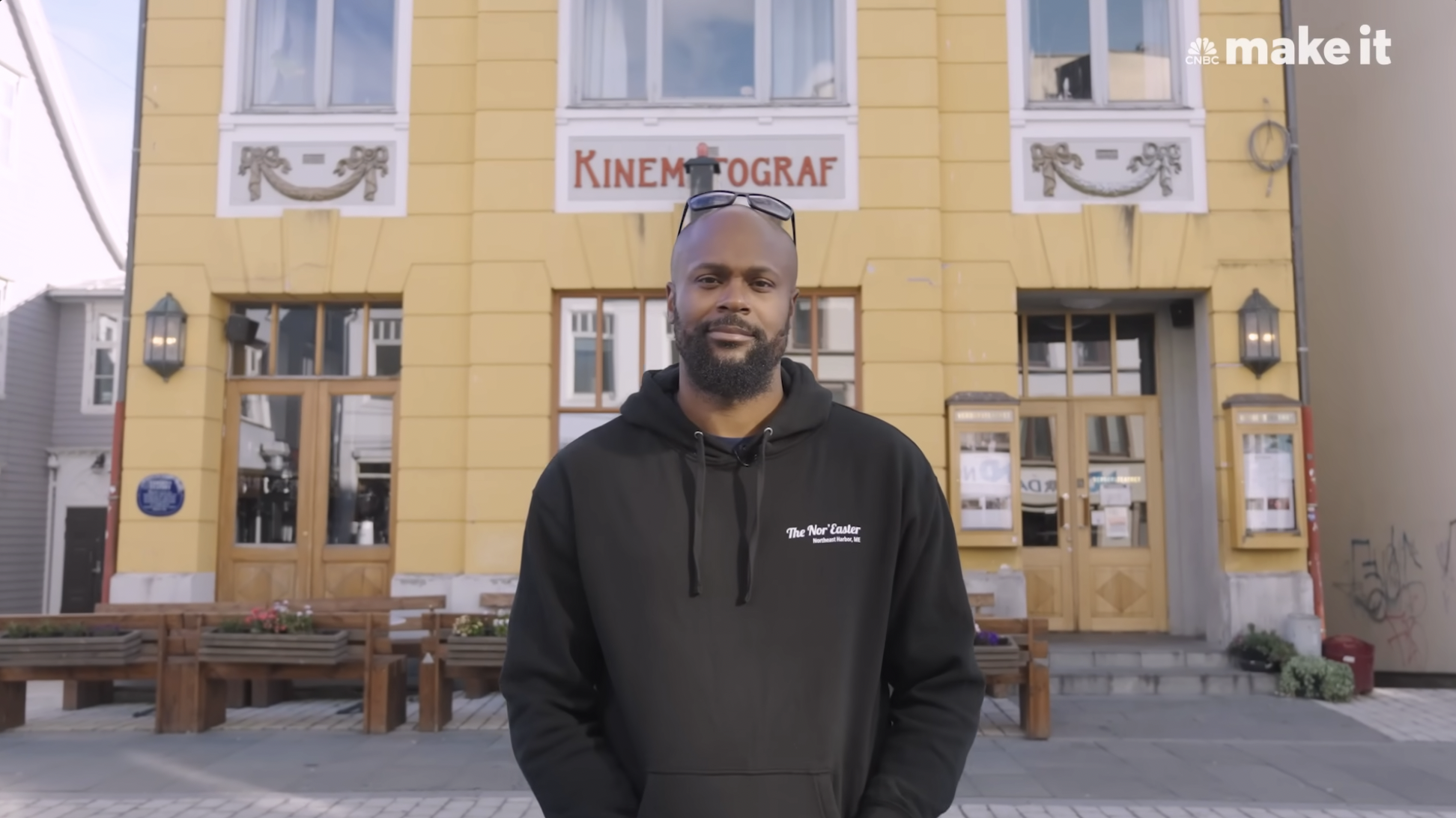
Robert E. Yarber
Robert E. Yarber didn’t move to Norway for the cute winter vibes.
He moved there because he genuinely loves it.
“A lot of people think that's crazy,” he says. “I like the weather. I like the snow. I like the cold. I like the darkness. I like the northern lights,” he says. “Svart Viking, you know? I'm a Black Viking.”
Robert is 41 and lives in Tromsø, Norway, 220 miles above the Arctic Circle. He left the United States after receiving a skilled worker visa in May 2022, which he renews every year for $640.
Today, he works as a bartender and bar manager. His life is simple in the best way: work, gym, friends, cafes, and enjoying the natural beauty around him. And Tromsø has its own unique energy too: it’s known as “the Paris of the North,” it’s becoming more touristy, and the seasons are extreme—midnight sun in summer, polar night in winter, and northern lights from September to March.
Robert pays 9,900 kroner a month, which is roughly around $1,000 a month. He admits he pays extra to live alone, and that means “I don't always have a ton of extra money to spend.”
He earns about 260 Norwegian kroner an hour, which is around $26 USD. But what stands out most is the work-life balance. His schedule is around 35 hours a week, and in Norway, “your work schedule legally has to be out two weeks in advance, and it cannot be changed…without your consent and permission,” which Robert finds “really freeing.”
The money system is different, too. He misses cash tips, because “tips aren't really a thing” in Norway. He says, “I make less money overall, but I make more consistent money.”
And with taxes around 32 to 34%, he actually respects where it goes: healthcare, medication, rides to the hospital, sick leave, “it just shows that it's a country that really cares about its people.”
Robert’s story hits deeper because he didn’t get here from an easy road. “I sat in a prison cell, six-by-nine cell, for five years of my life,” he says. After that, he didn’t want to just exist, he wanted to live.
“I wanted to see the world,” he says. “I just bet on myself and went for it all.”
Now he’s traveled to 44 countries, and he’s serious about staying in Norway long-term. He’s preparing for the Norwegian language test, working toward permanent residency, and building a future that feels bigger than his past.
“I feel very welcome in Norway,” Robert says. “I feel like it's my home.”
Check out Robert’s full story here.
Nicole’s Story: “Being in Oman, I'm very relaxed. I don't have as much stress.”
Age: 43
Where she lives: Oman
Notable costs: ~250 OMR/month rent (~$650) + ~$400/month food
Biggest benefits: Peaceful lifestyle, safety, utilities included, global travel access
Downsides: Far from family, conservative culture adjustment
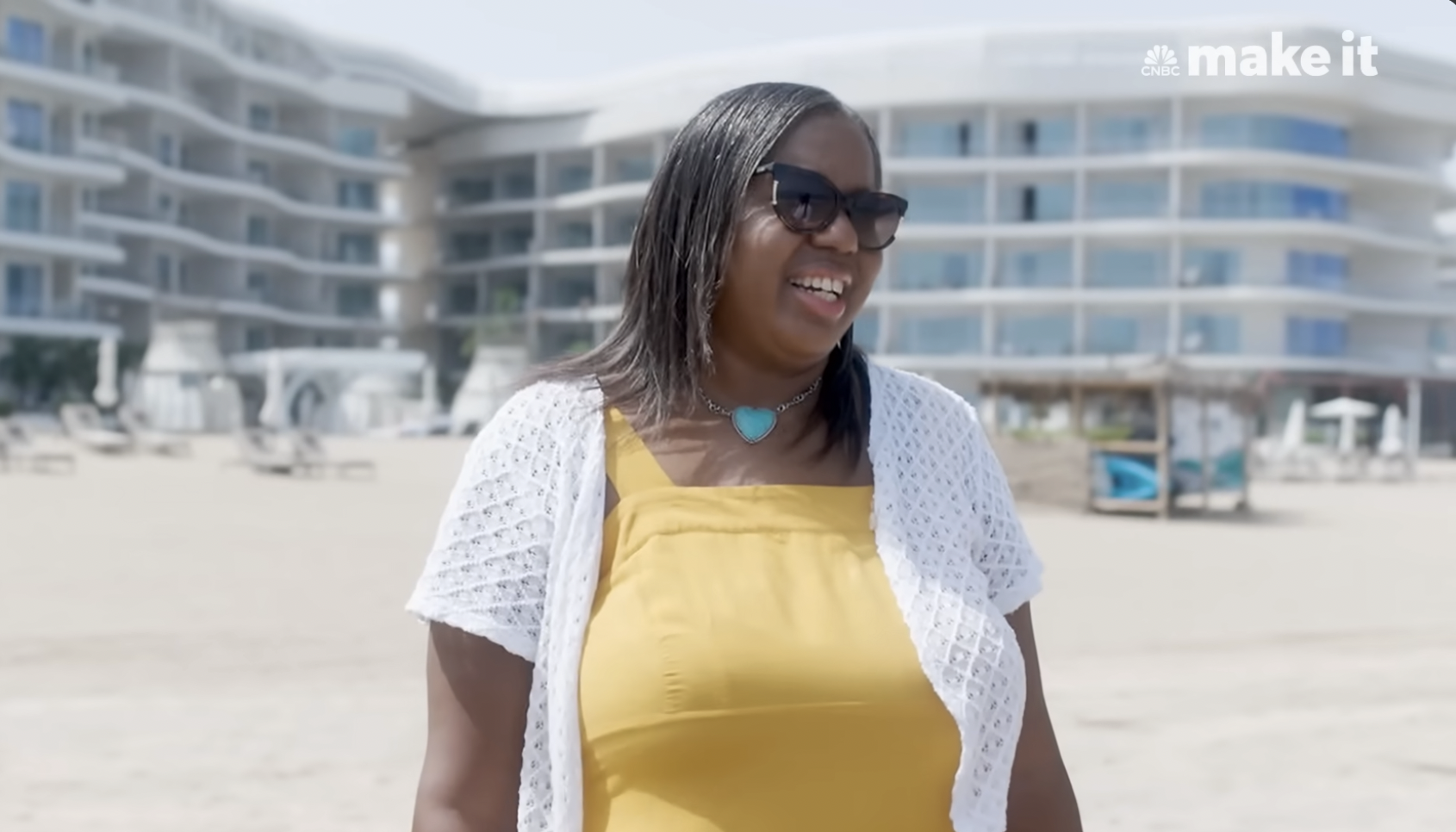
Nicole Brewer
For Nicole, what started as a temporary plan in search of something different turned into a whole new life.
“Initially, I told myself I would only leave for like a year or two once the economy got better [after the Great Recession] and 15 years later I'm still gone.”
Nicole is 43, and she’s now an English teacher, travel advisor, and travel writer living in Oman. And the biggest difference she feels is the calm.
“Being in Oman, I'm very relaxed, like I don't have as much stress,” she says. “They welcome me, they say, ‘Oh, hello, sister,’ like I'm one of them.”
Oman wasn’t even her first choice. She originally considered Dubai, but she found Oman “just by chance” and decided to go for it. She’s glad she did.
“I have had an incredible experience living in Oman,” she says. “It's a very safe and peaceful country.”
Nicole lives in a fully furnished two-bedroom, two-bath apartment for around 250 Omani rial a month, which is around $650 per month. The best part is that “all of my utilities are included. They even have internet included here.” Her only extra bill is her phone.
“My biggest expense is food and taxis because I actually don't drive,” she explains. She spends 25 to 30 Omani rial ($65-$78) probably a week on groceries, and only eats out about once a week.
Living in Oman also makes travel easier. “One of the things about living in the Middle East, the middle of the world, is just the location,” she says. She typically takes two or three big trips a year, plus smaller weekend trips, and she recently spent winter break in Bali.
Financially, she’s proud of the progress she’s made: “My credit card debt has actually gone down to zero.”
Nicole is honest that being far from family isn’t easy, and adjusting to a more conservative culture can be a shock. But she says the safety and peace are worth it. “I don't really fear living here as a Black woman,” she says. “So I am very grateful to live in a country that is so safe.”
She doesn’t see herself returning to the U.S. long-term. “Ideally, I would love to retire abroad,” she says, with Portugal being her dream destination.
Her biggest message is simple: “Do not let fear or outside voices deter you from your dream.” Because people warned her the Middle East was dangerous, but now “I’m living my best life here in Oman, one of the safest countries in the world.”
Check out Nicole’s full story here.
If there’s one thing all of these stories have in common, it’s that no one moved abroad because life was “perfect” back home. They left because they wanted something better: more peace, more freedom, more breathing room, and a lifestyle that actually felt worth it.
Even though they chose completely different countries, I noticed some common patterns: most of them talk about feeling safer, less stressed, and more welcomed, specifically as Black people. They’ve found places where community feels real, life isn’t centered around constant grinding, and their money stretches further, even if they’re earning less than they did in the U.S.
That doesn’t mean living abroad is easy. Homesickness still shows up. Culture shock is real. And being far from family can be one of the hardest parts. It’s not for everyone. But the tradeoff can be worth it, especially if you’re not just moving for a new view but for a new way of living.
And maybe that’s the real takeaway: the “American dream” isn’t found in one location. It’s wherever you can build the life that best suits you.